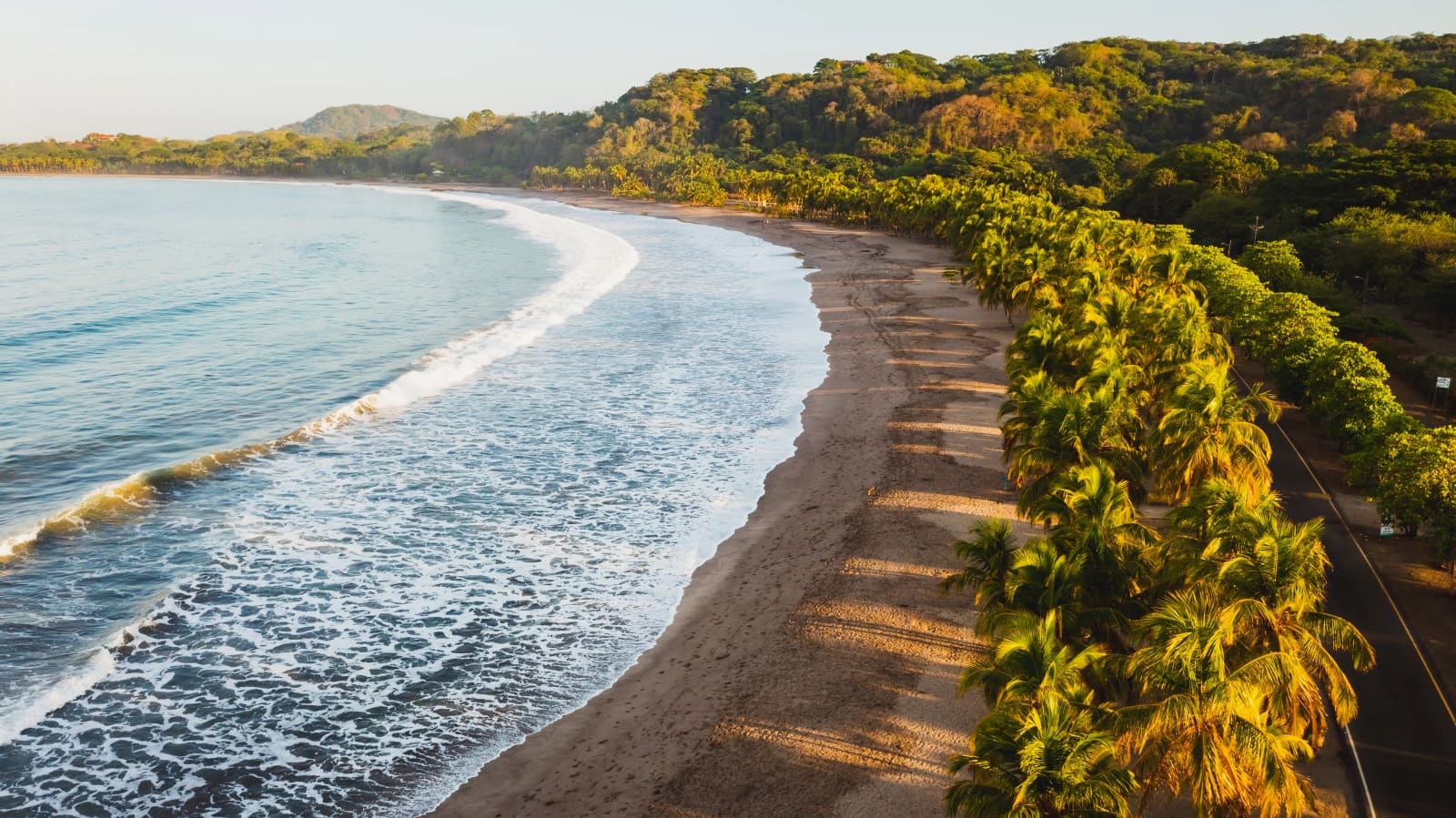
The Fishing Village That Became One of Costa Rica’s Most Expensive Addresses
In the early 1990s, Santa Teresa didn’t have electricity yet. It was a farming and fishing hamlet at the far end of the Nicoya Peninsula, the kind of place that existed on local maps and nowhere else. Then a small group of surfers found the waves.
Three decades later, that same stretch of coastline is priced alongside Escazú and Tamarindo — among the highest per square meter anywhere in Costa Rica. Ocean-view villas trade for $500,000 to $2 million. A modest hillside home starts around $300,000. And every high season, the town’s population quietly triples as visitors arrive from around the world, some of them never quite leaving.
I’ve watched this happen from the inside. I’m Costa Rican, born and raised, and Santa Teresa is one of the towns I get asked about most — usually by people who visited once, fell for it hard, and now can’t stop thinking about owning a piece of it. So I want to tell you the real story of how this place got here, because it explains almost everything about buying here today.
A town built by word of mouth, not by a master plan
Most of Costa Rica’s big real estate markets grew the way you’d expect — an airport nearby, a highway extension, a government tourism push. Santa Teresa didn’t have any of that. It grew because people who found it told other people, and those people didn’t want to leave either.
That origin story still shows up in the town’s personality today. Santa Teresa doesn’t feel like a resort corridor. It feels like a place that surfers, chefs, yoga teachers, and increasingly remote-working entrepreneurs built for themselves, and then quietly let the rest of the world in. Walk the strip between Playa Carmen and Santa Teresa Beach and you’ll find some of the best restaurants on the entire Pacific coast sitting next to open-air surf shops that haven’t changed their storefront in a decade.
That authenticity is, frankly, the product. It’s why people pay Escazú prices for a town with no traffic lights.
The numbers behind the hype
Here’s what’s actually happening in the market, not just the vibe.
Santa Teresa sits in Costa Rica’s top price tier by square meter, in the same conversation as Tamarindo, Nosara, and Escazú. Coastal villas in these prime markets have been appreciating on the order of 12–18% a year in recent cycles — a pace that turns a good vacation purchase into a genuinely strong asset over a decade.
But it hasn’t been a straight line up, and that’s actually the healthier part of the story. The pandemic years brought a frenzy — 2022 was the peak of a true seller’s market, with multiple offers on the same property. Then 2023 saw total sales activity settle back down by roughly two-thirds from that high. That’s not a market in trouble; that’s a market cooling off a sugar rush and returning to something buyers can actually reason about. Today’s prices reflect real demand, not pandemic panic-buying — which, if you’re looking to buy for the next twenty years rather than flip in two, is exactly the environment you want.
And there’s a second wave forming already: as the classic strip — Santa Teresa, Playa Hermosa, Mal País — holds firm on price, buyers have started spreading into San Isidro, Delicias, Montezuma, and Cabuya. Same peninsula, same lifestyle, earlier price point. It’s the same pattern that played out in Nosara a decade ago before Guiones became a household name.
The road that took six years to fix
Here’s a detail I love, because it says everything about how this country actually works.
For years, Santa Teresa’s main roads were unpaved — dust in the dry season, mud in the rainy months, a 4x4 basically mandatory to get anywhere. A local lawyer named Walter Brenes decided that wasn’t good enough for a town this important to the country’s tourism economy, and in 2018 he sued the municipality to force the issue. It took him six years. In 2024, the Cóbano Municipal Council finally agreed to pave the core roads and fix the drainage between Playa del Carmen and Quebrada del Carmen.
I bring this up not as a complaint but as a signal. Towns don’t fight for six years to pave their own roads unless the town is worth fighting for. And in my experience, the window between “the improvement gets approved” and “the improvement is finished and everyone’s noticed” is usually the best time to buy — the value hasn’t caught up to the news yet. Fiber-optic internet has been expanding across the peninsula on a similar timeline, which matters more than people expect: it’s what turns a vacation town into a place remote professionals actually live in year-round, which is what turns a seasonal rental into a twelve-month one.
What locals actually pay attention to
If you ask a Tico who knows this coast what really separates a good Santa Teresa property from a disappointing one, it’s rarely the view. It’s water.
This part of the peninsula doesn’t have a municipal water system the way a city does — homes rely on wells or the local water authority, and reliability varies genuinely property to property, especially in the driest months of the year. The properties that command real long-term value here are the ones with a dependable water source, full stop. It’s the single most important question a buyer can ask, and it’s one that’s very easy to verify before you fall in love with a view. The same goes for the septic system, since there’s no central sewage line out here — a well-built, properly sized system is simply part of what “well-maintained property” means on this coast.
None of this is a red flag. It’s just what due diligence looks like in a barrier-island kind of town, the same way a buyer in Florida checks flood zones or a buyer in Colorado checks well rights. Knowing to ask is what separates a happy ten-year owner from someone who overpaid for a photograph.
Why I think Santa Teresa is worth watching in 2026
I’ll be honest with you: I don’t think Santa Teresa is a hidden gem anymore. That ship sailed years ago, and the prices reflect it. What I do think is that it’s at an unusually interesting inflection point — infrastructure catching up to demand, a market that’s worked the froth out of its own system, and a second ring of nearby towns just starting to catch the overflow.
That’s the kind of setup that rewards buyers who do their homework over buyers who just fall for the sunset. If you’re one of the former, it’s a genuinely exciting market to be looking at right now.